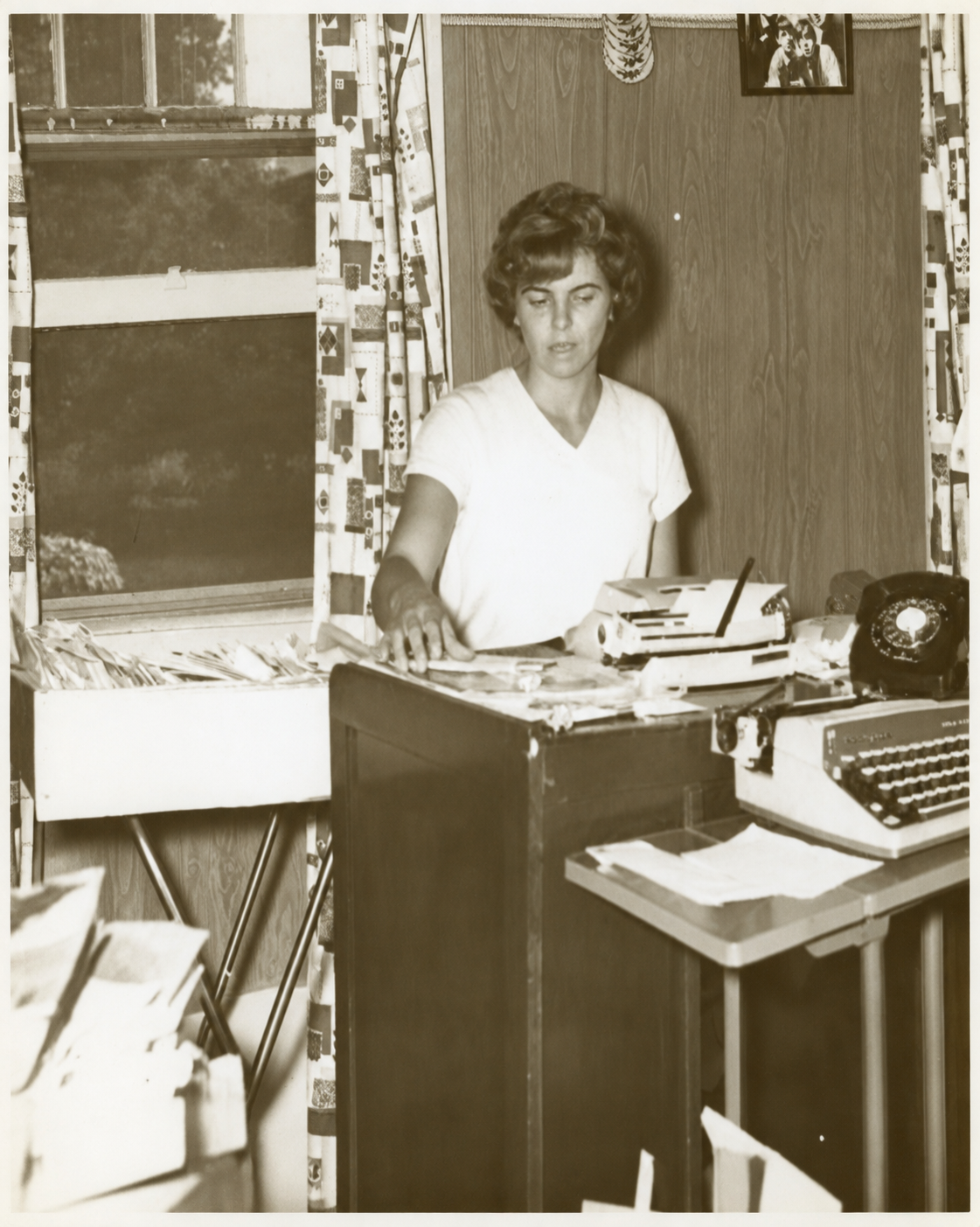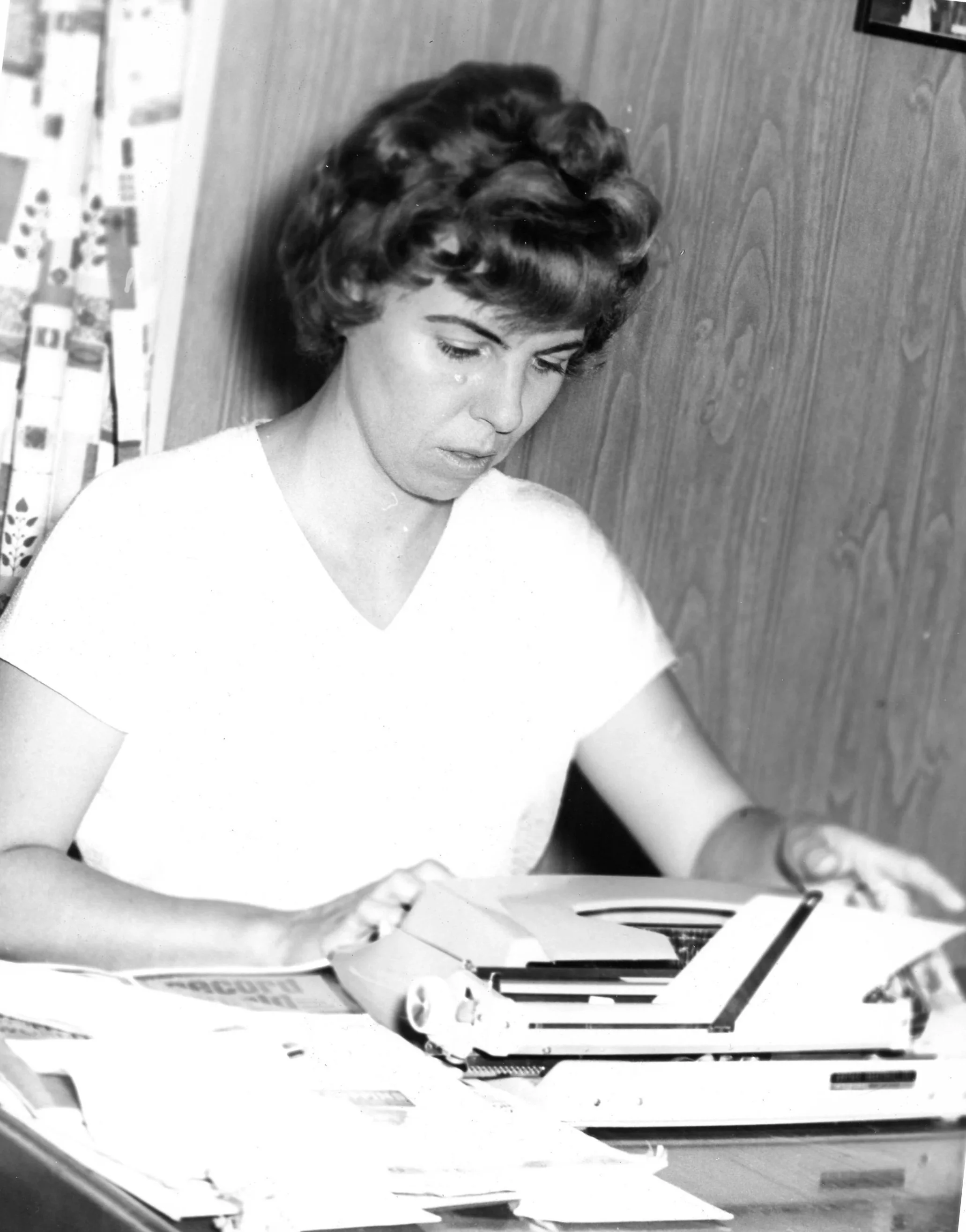
LOUISE HARRISON
The Beatles’ first promoter in America.
In 1963, Louise Harrison was living in Benton, Illinois. Her brother George’s band was breaking through in Britain, but American radio was still saying no to The Beatles. Louise carried their records into Midwest stations, urged DJs to listen, and reported what she learned to manager Brian Epstein.
BRIAN EPSTEIN TURNED TO LOUISE
On July 15, 1963, Brian sent Louise three Beatles LPs and four copies of “From Me to You.” He wrote that he would be “more than grateful for anything that you can do with the records” to help the group break in America. He also asked her to promote Gerry and the Pacemakers and Billy J. Kramer. He was counting on Louise, and she reported back to him.
THE WORK REACHED FURTHER
George was part of this effort too. On July 22, publisher Dick James sent records to Louise at George’s request. He asked her to pass them to local DJs and report how The Beatles were being received in the States.
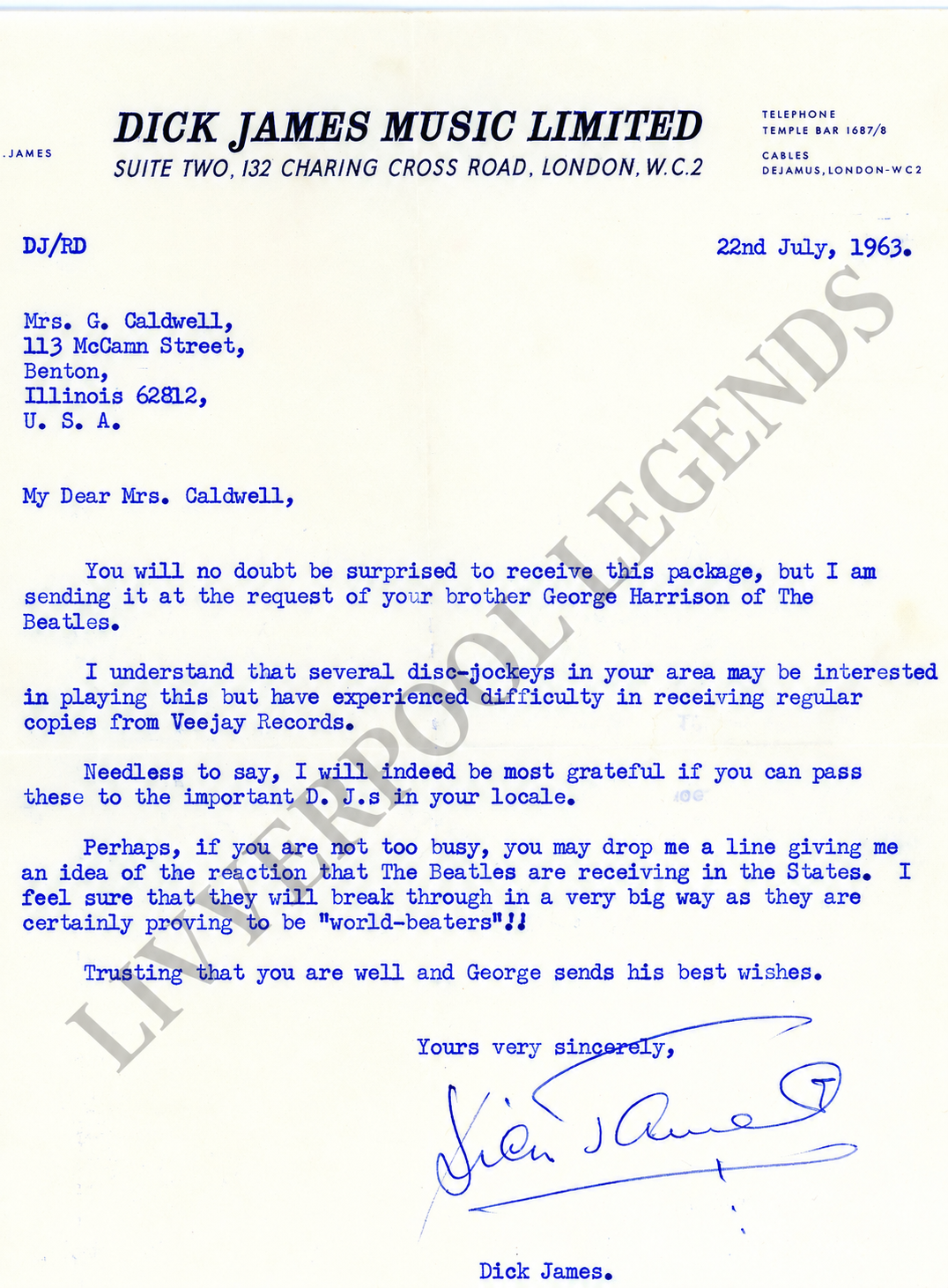
Louise often faced rejection as she tried to get The Beatles on American radio. She was persistent. No one knew what was coming. The Beatles were about to take the world by storm.
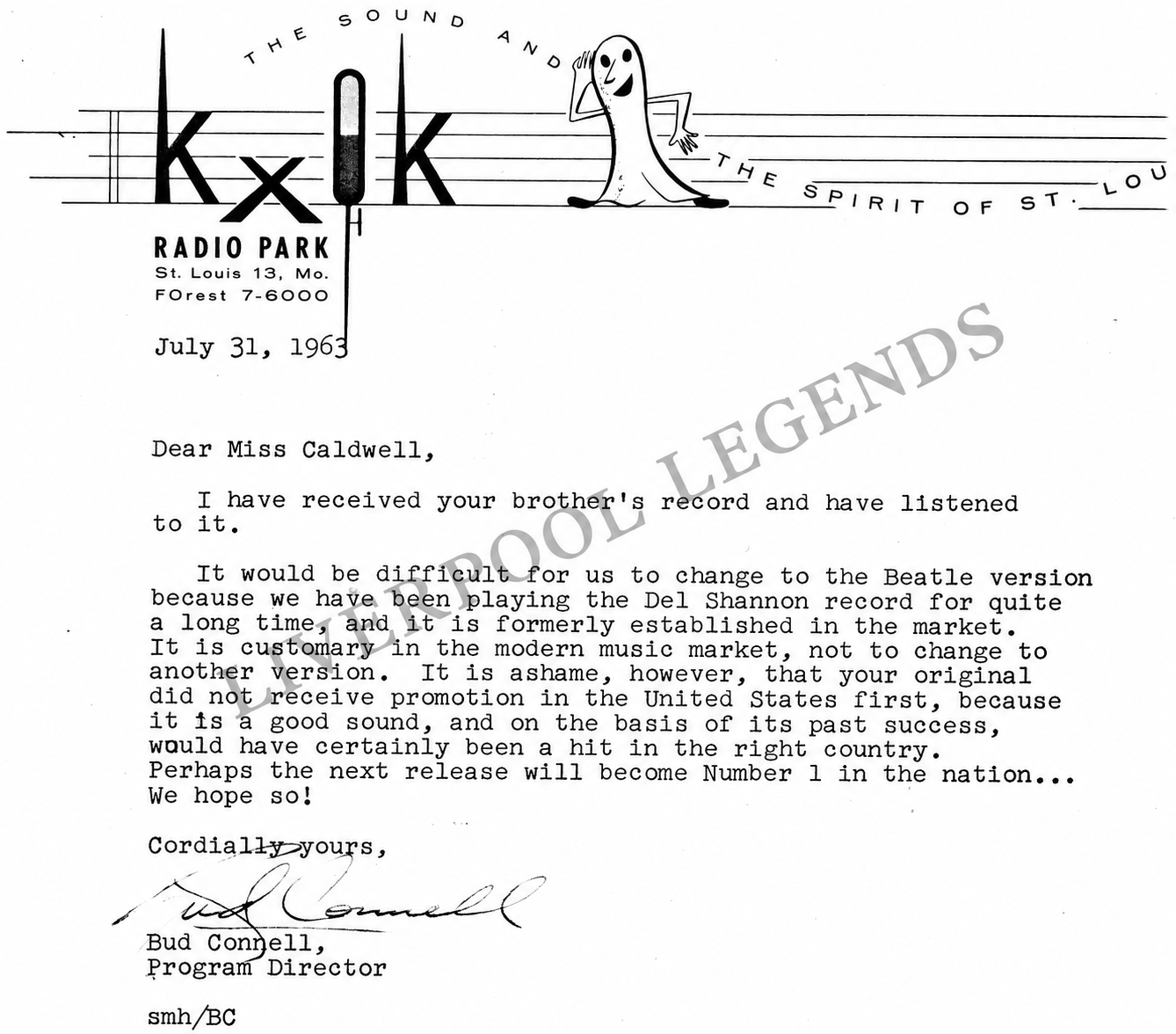
Louise mailed records beyond her driving range and sent Brian detailed reports from the ground. She was opening doors for The Beatles in America months before their first Ed Sullivan appearance.
GEORGE COMES TO ILLINOIS
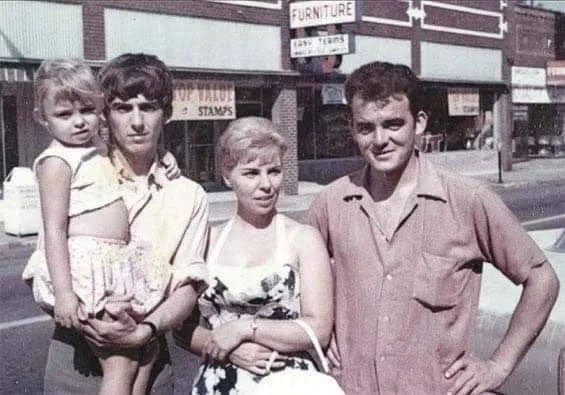
That September, George visited Louise in Benton. She arranged local radio interviews for him. George was the first Beatle to set foot in America, nearly five months before the group’s debut on The Ed Sullivan Show on February 9, 1964.
FROM THE AIRWAVES TO ED SULLIVAN
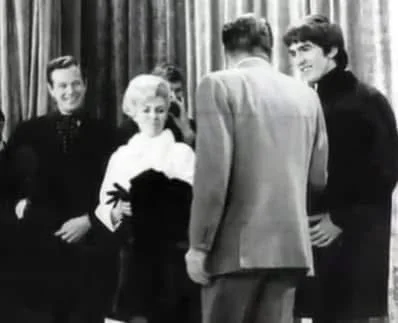
In February 1964, Louise was with George and the group in New York for their first Ed Sullivan Show appearances. When George fell ill with strep throat and missed a rehearsal, Louise cared for him at the hotel. Without Louise Harrison, the Beatles’ historic first appearance on The Ed Sullivan Show might never have happened.
Louise Harrison with Brian Epstein, Ed Sullivan and George Harrison.
Louise believed in her brother and his band before America caught on. She carried Beatles records through station doors, spoke up for the band, and worked tirelessly to get their music heard. Her story deserves to be told.